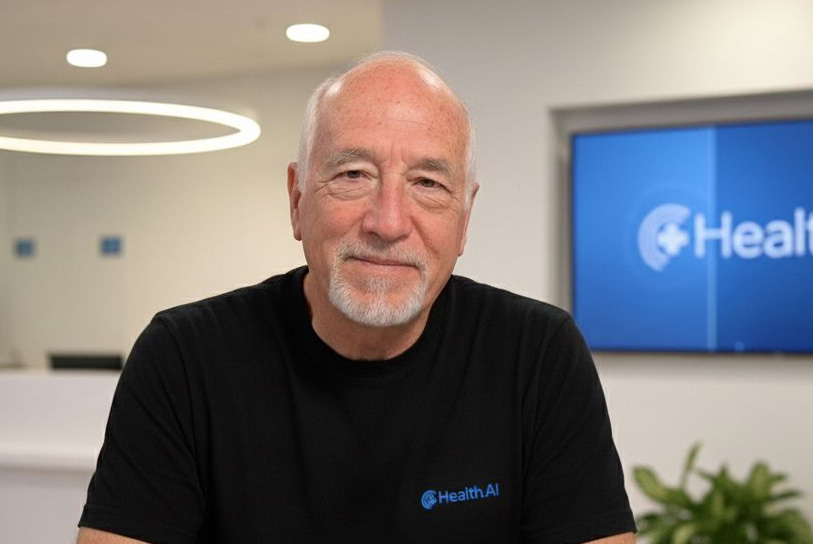
About Michael
Michael Greenhalgh is a computer scientist and AI researcher working at the intersection of artificial intelligence, longevity science, and evidence-based medicine. With Stanford training in Natural Language Processing and AI (2016-2017) and foundational work in computer science and linguistics from Sonoma State University, he brings a rigorous, first-principles approach to solving healthcare's most challenging problems.
As co-founder of Health.AI, Michael is building systems that validate medical information through multi-agent AI analysis, cutting through the noise of conflicting health advice to surface evidence-based truth. His vision: create transparent, open-access tools that function as a "ground truth engine" for healthcare—helping both patients and professionals navigate the reality that nearly 50% of current medical protocols are invalid, incomplete, or influenced by hidden conflicts of interest.
Michael's technical career spans four decades of building innovative companies—from co-founding IMS in 1984 (creating a programming language in assembler for distributed RDBMS systems), to designing metropolitan-area wireless internet infrastructure with Metro.Net and SAIC, to managing global network implementations for Wells Fargo's 5,000 branches. Each venture solved complex technical challenges through elegant system design.
Over the past decade, Michael shifted his focus to the hardest problem he'd encountered: healthcare information accuracy. As Clinical Director of Pacific Hyperbarics and co-owner of neurorehabilitation clinics across California, he witnessed firsthand how fragmented medical knowledge and physician overload impact patient outcomes. This clinical experience became a testbed for developing intelligent systems that could synthesize medical literature, detect logical inconsistencies, and identify non-obvious conflicts of interest.
His current research explores the convergence of AI, gerontology, and synthetic biology from a data science perspective. Michael believes recent advances in AI now make it possible to approach "true optimum health" by creating systems that can process global medical knowledge sources, break through AI guardrails imposed by economic influences, and validate diagnoses and treatments through rigorous multi-step truth algorithms.
Education: Stanford University (NLP & AI, 2016-2017) • Sonoma State University (Computer Science, Computer Linguistics, Philosophy, 1974-1981) • Thesis: ArpaNET as collective intelligence evolution